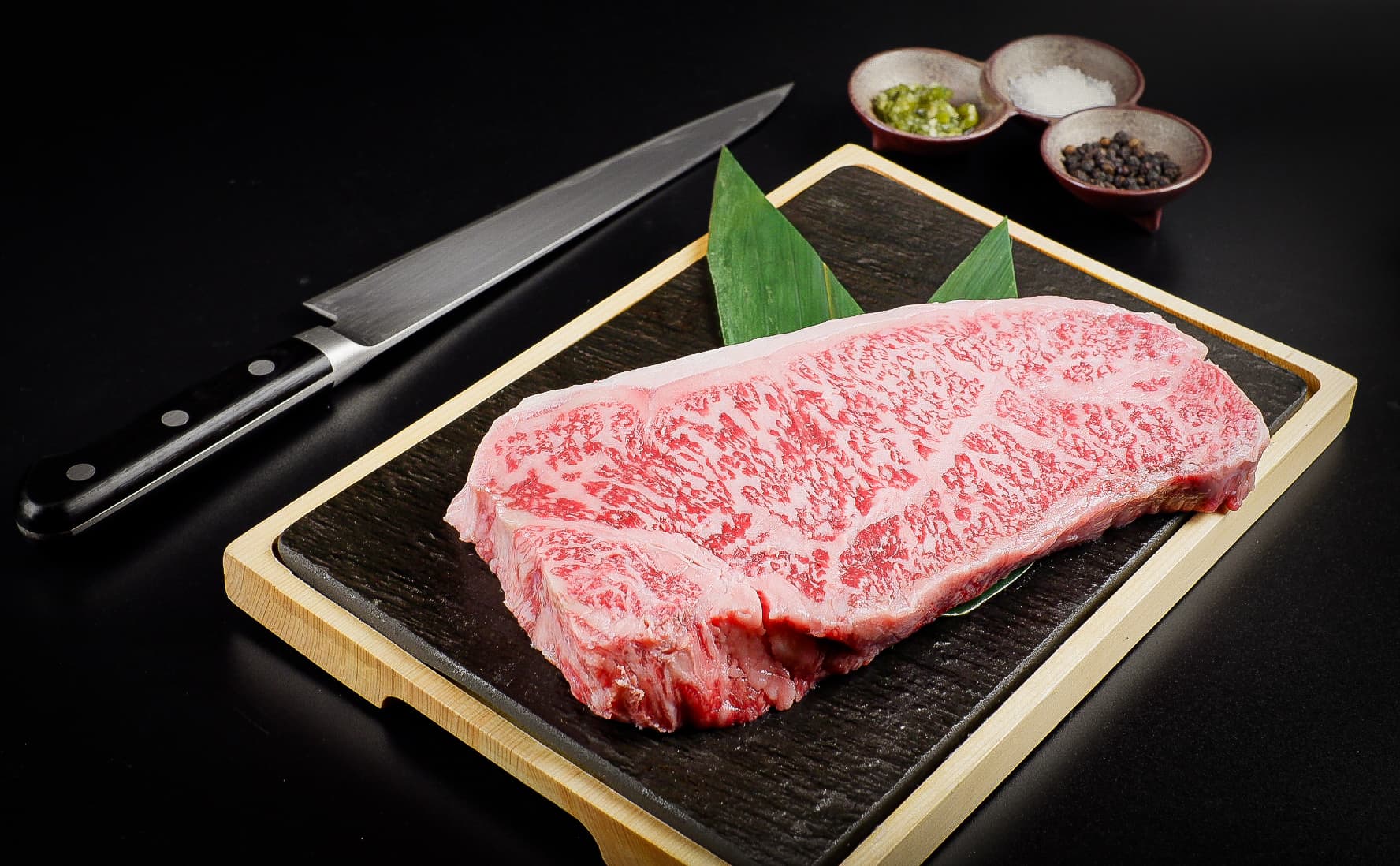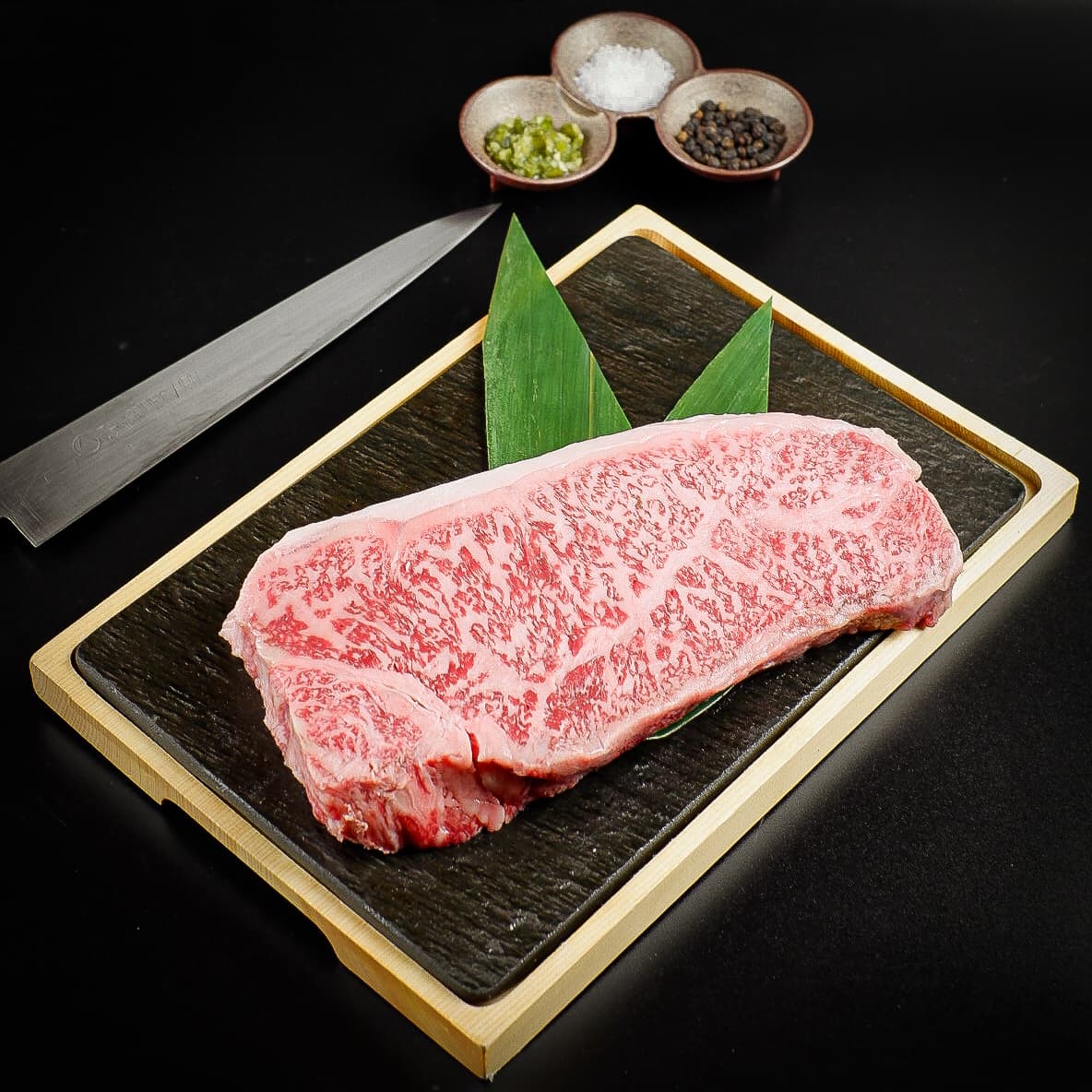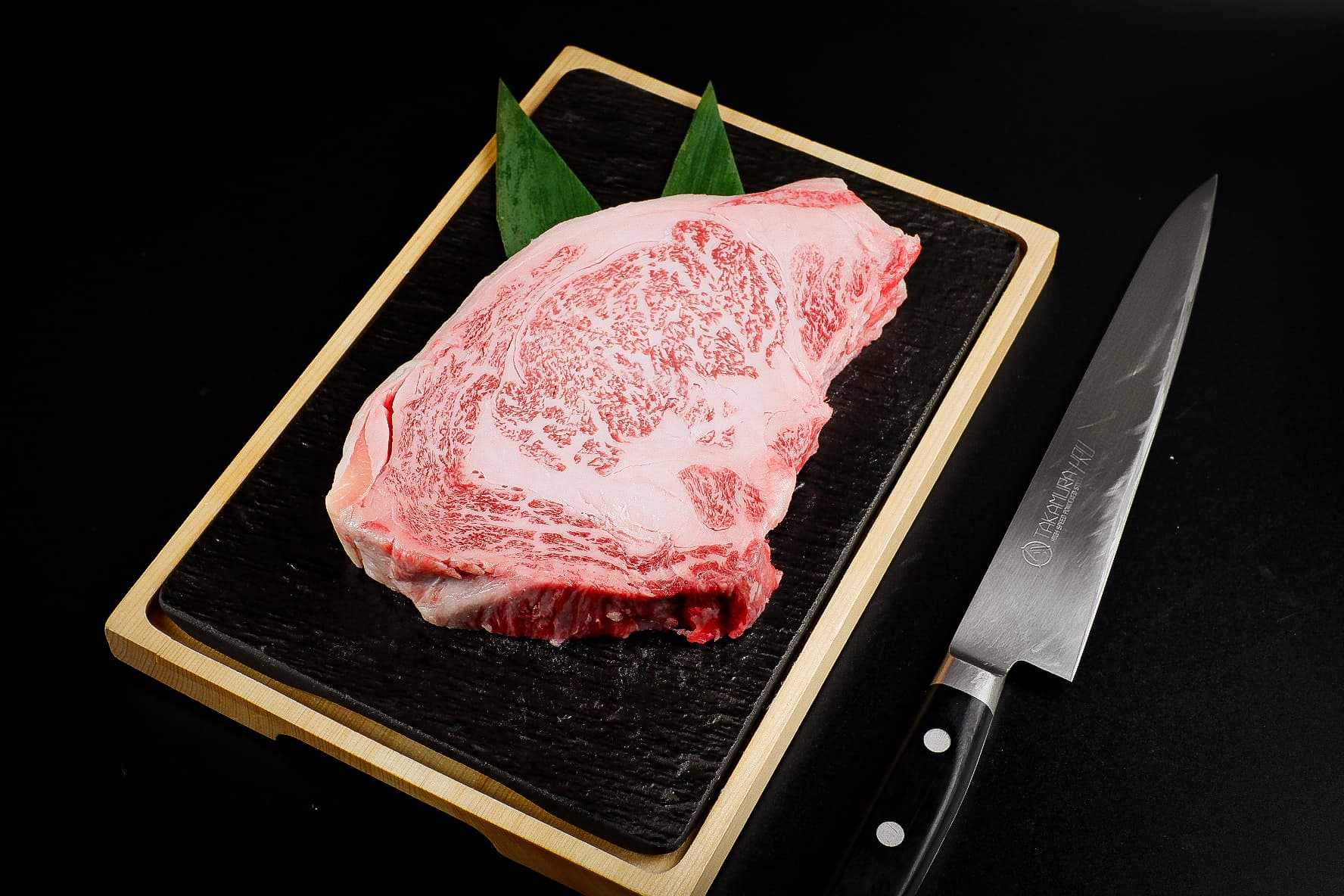
A5 wagyu is not a normal steak. If you cook it like one, you'll waste it. The marbling that makes it special also makes it behave differently under heat, and the techniques that work for a prime New York strip will overcook, render out, or simply overwhelm a piece of A5. Here's how to handle it properly.
Slice it thinner than you think
A5 steaks should be cut between 3/4 inch and 1 inch thick. Tenderloin can go up to 1.5 to 2 inches because it's leaner, but for ribeye, sirloin, and strip, keep it thin. Thick A5 cuts are hard to cook evenly. The exterior overcooks before the interior reaches temperature, and you end up rendering out too much of the marbling that you paid for.
For yakiniku-style preparation (tabletop grilling), even thinner slices work well. Roughly 1/4 inch, seared for seconds per side. This is how A5 is most commonly eaten in Japan, and for good reason.
The pan, the heat, the fat
Use cast iron. Preheat it to 400-500°F. Some chefs heat the pan in a 425°F oven first for completely even heat distribution, then transfer to the stovetop at medium-high.
Don't add oil. This is the single most common mistake people make with A5. The marbling provides all the fat you need. Place the steak in the dry pan and the fat renders out immediately on contact. Adding oil just dilutes the flavor and creates unnecessary splatter.
Don't add oil. The marbling provides all the fat you need.
Sear for about 1 to 1.5 minutes per side for a 3/4-inch cut. You want a golden-brown crust, not a hard char. The goal is medium-rare: pull the steak at 120-125°F internal temperature. It'll carry over another 5-8 degrees while resting, landing you at 125-130°F. Go past 135°F and you've overcooked it.
Why the fat melts differently
Wagyu fat melts at roughly 77°F (25°C). Regular beef fat melts at 104-122°F (40-50°C). That's a massive difference, and it's the reason A5 has that melt-in-your-mouth texture. The fat literally dissolves on your tongue.
The science behind it: wagyu beef contains approximately 53% oleic acid, the same monounsaturated fat that's in olive oil. Grain-fed Angus has about 40%. Monounsaturated fats inherently melt at lower temperatures than saturated fats. The extended feeding period (400-600+ days on grain) gives more time for enzymes to convert saturated fat into unsaturated fat, which is why longer-fed animals tend to have even softer, more buttery fat.
Resting: shorter than you'd expect
This is where A5 breaks from conventional steak wisdom. With a regular ribeye, you might rest it for 5 to 10 minutes. With A5, you want 1 to 2 minutes max. Here's why: wagyu fat starts to solidify as it cools. Rest it too long and that beautiful, liquid marbling begins to set. You lose the buttery texture that makes A5 what it is. Serve it while the fat is still warm and fluid.
Portions and plating
This isn't a 16-ounce steakhouse situation. A5 is rich. Really rich. In Japan, it's typically served in 3 to 5 ounce portions. For a restaurant course, 2 to 4 ounces per person works well as a featured item. For a full serving, 4 to 6 ounces is plenty. Serve more than that and your guests will hit a wall about halfway through.
Slice against the grain into thin strips before plating. This makes it easier to eat and shows off the marbling cross-section, which is half the experience. A few slices fanned across a warm plate, nothing more.
Seasoning
Keep it simple. Fine sea salt, applied right before cooking. A flaky finishing salt like Maldon works well on top after slicing. Black pepper is optional, and if you use it, add it after cooking since it can burn in the hot pan.
That's it. No marinades, no compound butter, no heavy sauces. The beef is the point. If you want to add something on the side, a touch of wasabi or a few drops of good soy sauce in the yakiniku tradition is all you need.
The mistakes that waste good beef
Overcooking is number one. Past medium-rare, the marbling renders out and you're left with something that cost A5 money but eats like a B3. Cutting too thick is number two, for the same reason. Adding oil to the pan. Serving too much per person. Drowning it in sauce. And resting too long, which lets the fat solidify.
Use a thermometer. With beef at this price point, guessing isn't a strategy. A good instant-read thermometer is the cheapest insurance you can buy.